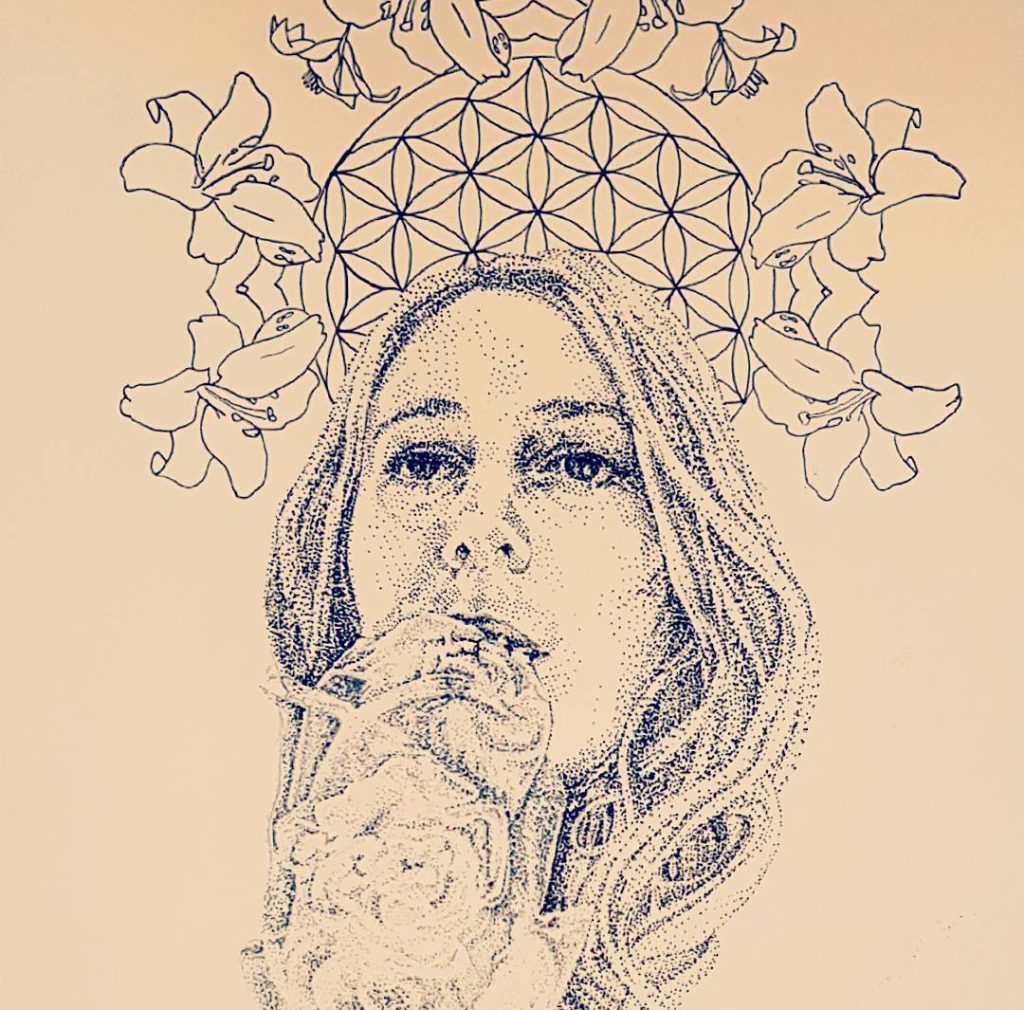
Emma Wood
Multiverse Analyst
At the heart of Wood’s current body of work is an inquiry into the estrangement engendered by modern technologies, including social media, artificial intelligence, and photography. She examines the distance these mediums impose between lived experience and its mediated projections. Found imagery and personal family photographs are juxtaposed within her compositions, their equal footing emphasizing the fragmented nature of memory and the shifting reliability of both collective and individual recall. Wood interrogates the unsettling reality of memory’s subjectivity, reflecting on the dissonance that arises when others misremember—or fail to remember—moments we hold as significant.
Although her figures often appear together within scenes, their shared presence does not diminish the sense of estrangement. Instead, these collective moments are imbued with a tension between connection and separation. The figures, while unified in space, frequently face the viewer directly, inviting confrontation with a deeply personal gaze. These interactions evoke a shared human condition—a recognition of loneliness even amidst togetherness. In such moments, there is a quiet acknowledgment of collective estrangement, a sentiment that resonates profoundly in the wake of lockdowns and the proliferation of digital interactions. While some might interpret this as melancholic, Wood finds solace in the paradoxical connection formed through shared solitude.
The debut of Hello Stranger, the inaugural painting from this series, at Fran Rowse’s Cornish Maids Salon in Penzance—Wood’s hometown—underscores these themes. The title, Hello Stranger, encapsulates the tension between intimacy and alienation, evoking the familiarity of reunion after a prolonged absence. The work depicts a child holding a basket of flowers, their gaze simultaneously intimate and enigmatic. The ambiguity of the scene—the origin of the subject, real or imagined—mirrors broader uncertainties surrounding memory and perception. Yet, in the act of looking, the viewer is drawn into a moment of profound recognition, as if seeing both the subject and themselves reflected.
Wood’s practice invites a re-examination of how we project meaning onto images and objects, challenging assumptions about memory, experience, and connection. By unearthing the layers of estrangement embedded in modern existence, her work transforms these themes into an evocative meditation on the universal human condition. Through her distinctive visual language—marked by hyper-saturated palettes, muted tonalities, and blurred contexts—Wood offers a refracted lens on the absurdities of modern life.